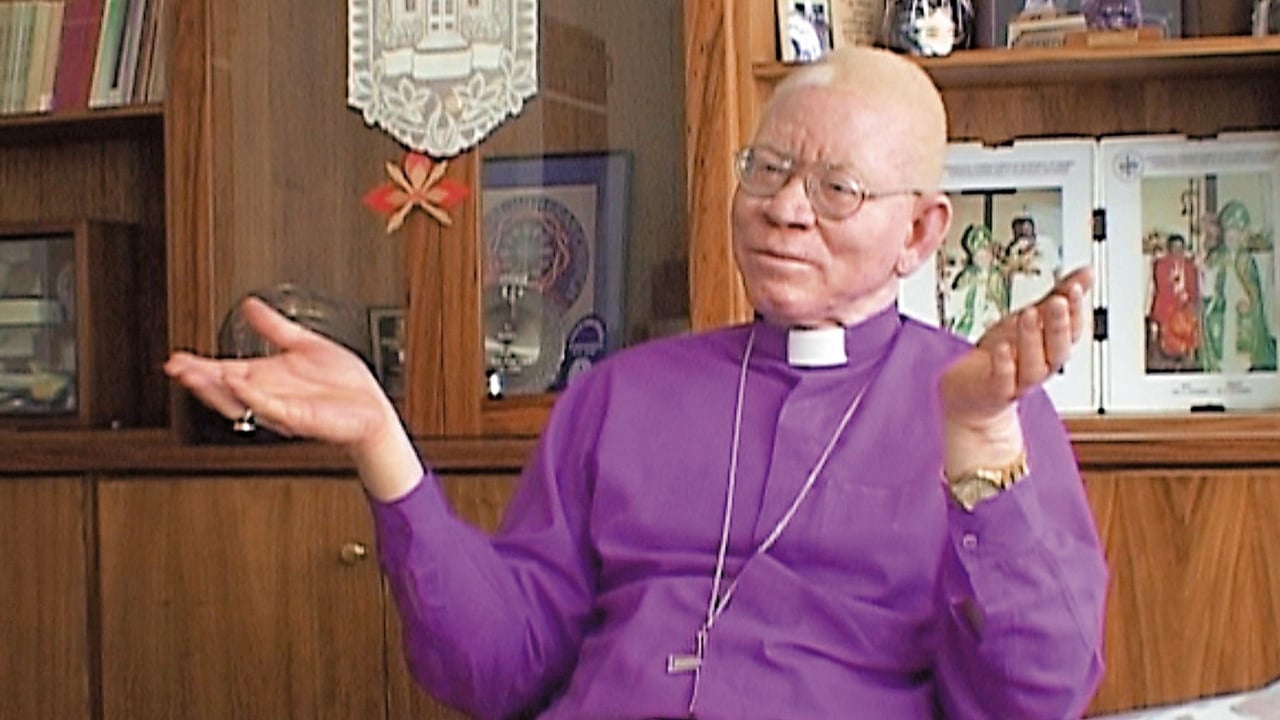
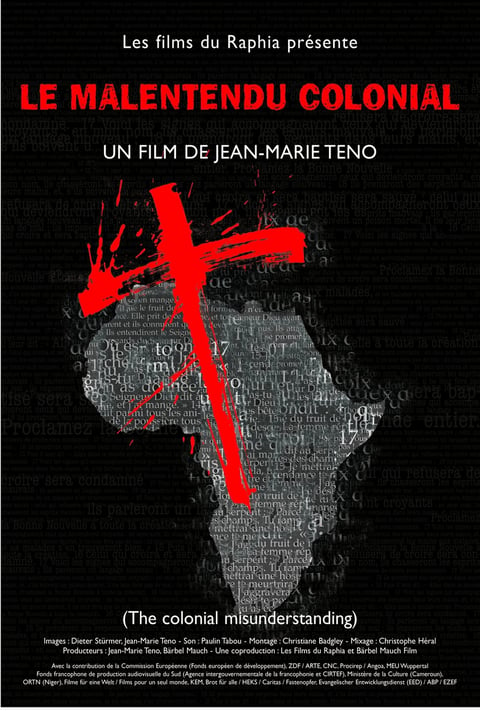
The Colonial Misunderstanding
Jean-Marie Teno traces how Christian missions paved the way for colonial rule, from Wuppertal to the Herero genocide in Namibia.
Una película de Jean-Marie Teno
Les Films du RaphiaPago seguro en Tribushare · Vendido por Tribushare en nombre de Les Films du Raphia
- Estreno
- 2004
- Género
- Documental, Histórico
- Duración
- 1 h 15 min
- Audio
- Inglés · Stereo
- Calidad
- HD
- Relación de aspecto
- 16:9
Sobre la película
“When the missionaries arrived, the Africans had the land and the missionaries had the Bible. They taught us to pray with our eyes closed. When we opened our eyes, they had the land and we had the Bible.” Starting from these words by Jomo Kenyatta, Kenya’s first elected Prime Minister and President, Jean-Marie Teno examines Christian evangelism as the forerunner of European colonialism in Africa, and as the ideological model for the relationship between North and South that still holds today.
The film begins in Wuppertal, home of the Rhenish Mission, which sent missionaries to southwest Africa from the 1840s. On the centenary of the 1904 German genocide of the Herero, it looks at the missionaries’ role in Namibia. Drawing on African philosophers and historians, it shows how colonialism destroyed African beliefs and social systems and replaced them with European ones, as if they were the only acceptable routes to modernity. As Professor F. Kangué Ewané says in the film: “I can forgive Westerners for taking away my land… but not for taking away my mind and soul.”
- Dirigida por
- Jean-Marie Teno
- Estudios
- Les Films du Raphia, Bärbel Mauch Film, ZDF, ARTE
- Distribuida por
- Les Films du Raphia
Compartir y ganar
Comparte esta película. Gana un 10 %.
Tu enlace personal funciona con todas las películas. Durante 30 días, ganas el 10 % de todo lo que tus amigos alquilen o compren.
Lo que dice la gente
- Selección oficialIDFA2004
- Selección oficialNew York African Film Festival2005
- Selección oficialCaravane des Cinémas d'Afrique2006
“Partant d’une mission allemande fondée au XIXe siècle en Namibie, le cinéaste démontre, dans un dossier à charge foisonnant, comment les hommes d’Eglise furent les meilleurs auxiliaires du colonialisme.”
“Le manifeste est chez Teno inséparable de l’analyse.”
“La voix du réalisateur (...) raconte la recherche, les rencontres, sans se substituer à son sujet, sans éluder l’ambivalence de certains acteurs de ces terribles événements.”
“Classique dans sa forme (...) ce documentaire se distingue par le parti pris militant de ses commentaires (...) Il est salutaire de regarder notre passé en face.”
“Loin de polémiquer, son propos redonne voix à une vérité historique enfouie.”
“Teno has been making a series of eloquent documentaries about the African legacy of colonialism. In this most recent work, Teno tells the story of the devastation of a continent with wit, irony and historical passion.”
“The film is Afropolitanism at its best...continually makes provocative points.”
Dentro de la película
Reparto y equipo
- Jean-Marie TenoDirección, Producción, Escritura, Fotografía, Sonido directo, Narración
- Bärbel MauchProducción
- Dieter StürmerFotografía
- Christiane BadgleyMontaje
- Paulin TabouSonido directo
- Christophe HéralMezcla de sonido