How to Make a Film Pitch Deck: Slide by Slide, With Real Examples
A pitch deck gets your film a second meeting. Here is the slide order that works, how long to make it, what investors and documentary funders check first, and real decks to learn from.
 Ben Lachaise WienerUpdated November 25, 20269 min read

A film pitch deck is a short slide document, usually 12 to 20 slides, that sells your project to the people who can fund or join it: investors, producers, funds, sales agents, actors. It covers the logline, story, tone and look, the team, why the film will find an audience, the budget and what you're asking for. Screenwriter-director John-Michael Powell describes it as "part business card, part mood board, and part blueprint." Below is the slide order that works, how long to make it, what different readers look for, and real decks you can study.
What a pitch deck is for
A deck doesn't get your film financed. It gets you the next step: a meeting, a script read, a request for the budget. Write every slide with that in mind. The reader should finish knowing what the film is, why you're the one to make it, and exactly what you want from them.
It's also rarely alone. A deck usually travels with a script or treatment, and often with a video. If you have footage, read our guide to cutting a sizzle reel: the deck explains, the reel makes people feel, and the two work best sent together.
The slide-by-slide structure
This order works for most independent features. Adjust it, but keep the logic: story first, then why it works, then who, then money.
| # | Slide | What goes on it |
|---|---|---|
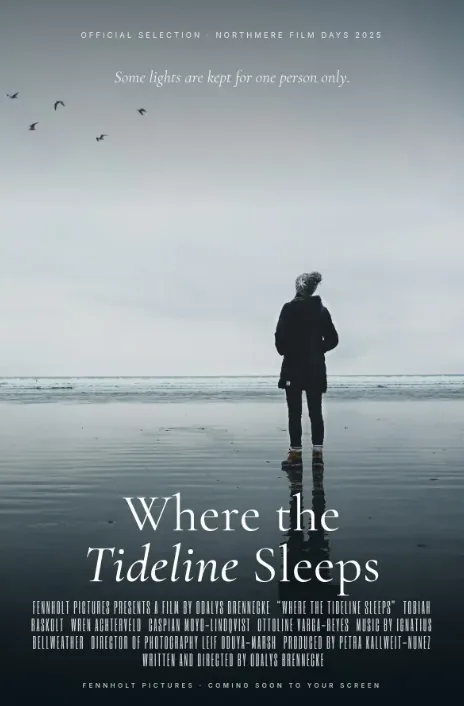
| 1 | Cover | Title, a key image, your name. Design it like a poster. |
| 2 | Logline | One sentence: who, what they want, what stands in the way. |
| 3 | Synopsis | Half a page. Beginning, middle, and enough of the end. |
| 4 | Why this, why now | The reason the film matters and why it's timely. |
| 5 | Characters | One slide per lead or one for all, with a face reference. |
| 6–7 | Tone and look | Reference frames, palette, locations, music feel. |
| 8 | Director's vision | A short note from you on how you'll tell it. |
| 9 | Team | Director, producers, key crew, attachments. Credits, not adjectives. |
| 10 | Comparables | 3–5 similar films: budget, release, what they earned. |
| 11 | Audience and release | Who watches this and how you'll reach them. |
| 12 | Budget and financing | Total budget, what's in place, what you're raising. |
| 13 | Status and timeline | Script draft, development, shoot dates, delivery. |
| 14 | The ask and contact | What you want from this reader, and how to reach you. |
Slides that do the most work
The logline. If the reader can't repeat your film in one sentence after the first two slides, the rest won't save it. Test it on someone outside the industry.
Tone and look. No Film School's guide to building a pitch deck suggests "stills from films that are referential or similar," a "color palette for look your going for," and "news headlines or articles pertinent to your story." It points to Film Grab, ShotDeck, FrameSet and the Internet Archive for reference images. Use them for tone, but don't build your film's identity on someone else's most famous frame.
Comparables. Pick films that are genuinely similar in genre, budget level and talent profile, released in the last five to seven years. A $400,000 drama comparing itself to a studio hit reads as naive. Two or three honest comps that made their money back are more convincing than one breakout.
The ask. Be specific. "We're raising $350,000 in equity toward a $900,000 budget; $400,000 is committed through a state tax credit and a regional fund" is a slide an investor can act on. "Join us on this journey" isn't.
How long, and how it should look
Powell's advice on length:
I'd recommend keeping it under 30 pages. Honestly, 20 or fewer is even better.
Most decks land between 12 and 20 slides. A deck you send ahead of a meeting has to stand on its own and can run a few slides longer; one you present live can be shorter, with you filling the gaps.
His design advice, from the same piece:
- Write the words before you start designing.
- Design the cover the way you'd design the poster.
- Choose portrait or landscape to suit the film.
- "Simplicity is clean, and clean is clear."
- "Don't get caught up in software worship."
He built his decks in Photoshop and InDesign. Canva, Keynote, Google Slides or PowerPoint work fine. What matters more:
- One idea per slide. If a slide needs a paragraph, it's two slides or it's in the wrong document.
- Readable on a phone. Many readers open your PDF on a phone. Large type, high contrast, no 9-point captions.
- Export a PDF under about 20 MB. Name it
Title_PitchDeck_2026.pdf, notfinal_v7.pdf. - No spelling mistakes in names. Getting an attached actor's name wrong ends meetings.
What investors and funders look for
Different readers open the same deck looking for different things. Know who you're sending it to and adjust the second half.
Equity investors
Private investors want to know how they get their money back. Put the essentials in the deck and keep the details in separate documents: a line-item budget, a financing plan, a recoupment waterfall and, eventually, the operating agreement for your production company.
They'll ask about the terms. Joe Wehinger, writing in Daily Ovation, says that "A 120% recoupment is the standard market rate for independent film equity," that a 50/50 split of profits after recoupment "is standard for experienced producers with established track records," and that "A 70/30 split heavily favoring investors is typical for first-time producers." You don't need the waterfall in the deck, but you should be able to answer that question in the room.
What reassures an investor: attached talent with a track record, money already committed (tax credits, grants, pre-sales), honest comparables, and a producer who has delivered a film before. Be careful with promises of returns. Raising money from private investors is regulated, so have an entertainment lawyer review any deck that goes to people you're asking for equity.
Documentary funds
Documentary funders read for access first. The Sundance Institute's Documentary Film Program says for development grants (up to $40,000) that "Access to location and characters must be confirmed" and that the proposal should "clearly articulate a visual language and central questions." Teasers or pitch decks are encouraged but optional; production applicants must send a work sample of at least 10 minutes. The fund supports 25 to 30 projects a year and prioritizes films with budgets under $1.2 million.
Catapult Film Fund offers development grants of up to $25,000 to filmmakers who "have a strong story to tell, have secured access, and are ready to unlock critical production funding," and the grant must produce a fundraising piece.
So a doc deck leads with the subject and your relationship to them: who you're following, how you got in, what you've already filmed, and what happens next in their life that the camera will catch.
Producers, actors and sales agents
Producers read for a clear vision and a realistic plan. Actors and their agents read the character slides and the director's vision. Sales agents look at genre, cast and comparables, because that's what they sell at markets. For each, consider a version that moves their slides forward.
Documentary vs. fiction vs. series decks
| Documentary | Fiction feature | Series | |
|---|---|---|---|
| Leads with | Subject, access, urgency | Logline, tone, character | Concept, world, season arc |
| Story section | What has happened, what you expect to film | Synopsis of the script | Pilot summary, episode loglines |
| Proof | Footage already shot, letters from participants | Script, proof-of-concept short | Pilot script, bible |
| Specific slides | Impact or outreach plan, archive sources | Cast wish list or attachments | Future seasons, franchise potential |
| Typical reader | Grants, broadcasters, impact funders | Equity investors, producers | Studios, streamers, production companies |
Documentary. You can't promise an ending, so promise a question and show you can follow it. Your best slide is a photo of you with your main subject. If there's an impact campaign, a partner organization's letter of support is worth more than a page of goals.
Fiction. Story and tone carry the deck. A proof-of-concept short or a strong previous film does more than any slide.
Series. The deck is often called a bible and runs longer, because you're selling a world that has to sustain many episodes. You need the pilot story, a season arc, a list of episodes and a sense of where seasons two and three go.
Real decks you can study
Violent Ends (fiction feature). Powell shares the PDF of his deck in his Substack post, along with the deck for an unproduced script, Empire Motor Lodge. He says the Violent Ends deck "played a major role in securing our financing" and helped attach Billy Magnussen, Alexandra Shipp and James Badge Dale. It's built around a cover, logline, synopsis, tone and style pages and a call to action, with no character pages because the synopsis does that work.
Scrambled (fiction feature). No Film School's guide reproduces the deck writer-director Leah McKendrick shared for her feature. It's a useful counterexample on length: over 30 slides, heavy on images and tone.
Montauk, which became Stranger Things (series). The Duffer brothers' pitch bible was "Written and presented as an old-school paperback horror novel," according to Dread Central. SPYSCAPE describes it as a 23-page bible that pitched the show as "A love letter to the golden age of Steven Spielberg and Stephen King," and sketched a possible follow-up set in 1990. It was turned down by more than a dozen studios before it sold, which is worth remembering.
The Boys (series). Eric Kripke's original pitch, discussed by No Film School, shows how far one comp line can carry tone: "An early Guy Ritchie movie, meets Deadpool, meets Inglourious Basterds, meets a Denis Leary rant, meets The Raid."
Mistakes that sink decks
- No logline on slide two. The reader shouldn't have to hunt for what the film is.
- Comps that flatter you. Choose films your budget and cast can actually be compared to.
- Adjectives instead of evidence. "Award-winning team" means nothing; "producer of two features that premiered at SXSW" means something.
- No ask, or a vague one. End on an amount, a role, or a meeting request.
- One deck for everyone. Make a short version for first contact and a longer one for serious interest.
- No contact details on the last slide. It happens more than you'd think.
After the deck works
If the deck gets you funded, the people you pitched become your first audience. Keep them updated, and keep a list of everyone who said yes. When the film is finished, that list is where your first sales come from. If part of your budget will come from the public, our guide to film crowdfunding covers how a campaign page adapts the deck for backers. Once you're in festivals, the deck's story and images become the core of your press kit.
Tribushare comes in at the other end: when the film is ready, it gives you a film page to sell rentals and purchases directly and keep every buyer's email. A project page with a sizzle reel and follower count, to build that audience while you're still pitching, is coming soon. See pricing.
Frequently asked questions
Between 12 and 20 slides covers almost every project. Screenwriter-director John-Michael Powell recommends keeping a deck under 30 pages and says 20 or fewer is better. Investor decks run a little longer because of the financial slides; a deck sent ahead of a meeting can be shorter than one you walk someone through.
A lookbook shows how the film will look and feel: reference images, palette, locations, tone. A pitch deck includes that but also covers story, team, budget, market and the ask. Many filmmakers fold a short lookbook section into the deck rather than sending two documents.
Put the total budget and how much you are raising in the deck, plus a one-line breakdown of sources. Keep the line-item budget, the full financial plan and the recoupment waterfall in separate documents you send after a first meeting.
For a private deck shown to funders, filmmakers routinely use reference frames from other films to convey tone. Keep it private, credit the films, and never use those images in public marketing. Too many famous frames can also make readers think about those films instead of yours.
Sources
- John-Michael Powell (Cinesthesia): Pitch Perfect, How to Build a Deck That Gets Your Film Made, read on November 25, 2026
- No Film School: How to Build a Pitch Deck, read on November 25, 2026
- No Film School: Study Eric Kripke's Original 'The Boys' Pitch, read on November 25, 2026
- SPYSCAPE: Stranger Things Bible, the Duffer Brothers Pitch Deck, read on November 25, 2026
- Dread Central: Stranger Things Pitch Bible Is a Work of Paperback Horror Art, read on November 25, 2026
- Sundance Institute: Documentary Film Program, read on November 25, 2026
- Catapult Film Fund: Development Grant, read on November 25, 2026
- Daily Ovation: Film Investor Recoupment Waterfall (Joe Wehinger), read on November 25, 2026
Competitor prices come from their official pages on the date shown. Prices change: check their page before deciding.