Living Prayer in Hinduism
offers a poetic, experiential portrait of living Hindu devotion in India and Bali, revealing the unity beneath its many deities and rituals
Secure checkout on Tribushare · Sold by Tribushare on behalf of the filmmaker
- Genre
- Documentary
- Runtime
- 1h 2m
- Audio
- English, French · Stereo
- Subtitles
- 6 languages
- Quality
- FHD
- Aspect ratio
- 16:9
 ILiving Prayer in Buddhism
 IIThe Gates of Shinto
 IIILiving Prayer in Christianity
 IV · This filmLiving Prayer in Hinduism
About the film
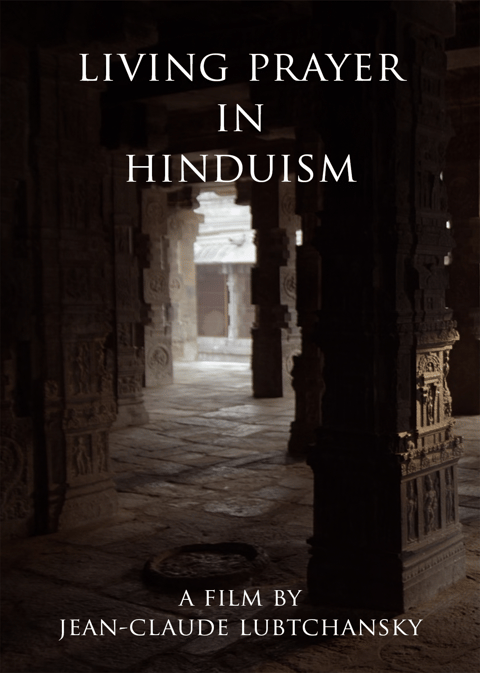
Living Prayer in Hinduism is a poetic, experiential “spiritual archive” of living Hindu devotion, in which a deeper unity emerges beneath the swirl of deities and rituals, shaped by the self-inquiry tradition of masters like Ramana Maharshi and narrated from sacred texts
Where to start? Hinduism first unfolds as a swirl of deities, celebrations, colours and poverty saturating the Indian landscape. The intricacy of the Hindu faith only reveals itself once these immediate visions are relinquished and a deeper layer is allowed to come into view. Something needs to let go, and in the same time to be embraced. The pantheon of gods are different aspects of the same energy manifesting in contact of what is needed to be seen.
Recognising the role of recent spiritual masters like Ramana Maharishi (1879-1950), is essential. Maharishi emphasized self-inquiry and direct experience, rather than complex rituals or cultural specifics. This made Hindu philosophy more accessible to Western minds, who could relate to introspection, meditation, and the idea that the Self is always present. In the Hindu tradition, spiritual practice often aims at realising the eternal Self, not something to be attained or created, but the unchanging essence beneath mind and body. True practice is not about adding or changing, but recognising what is already here. In this context, silence itself becomes a form of devotion.
This project is seen as a spiritual archive of living masters, providing a sense of the profound taste of the experience of ripened prayer that is beyond teaching and more akin to what is experienced in prayer. The approach is poetic, evocative and experiential with the force of nature, the beauty of the world and the essence of human kind rather than teaching or philosophical explanations.
The narration is based on sacred texts of Hinduism tradition.
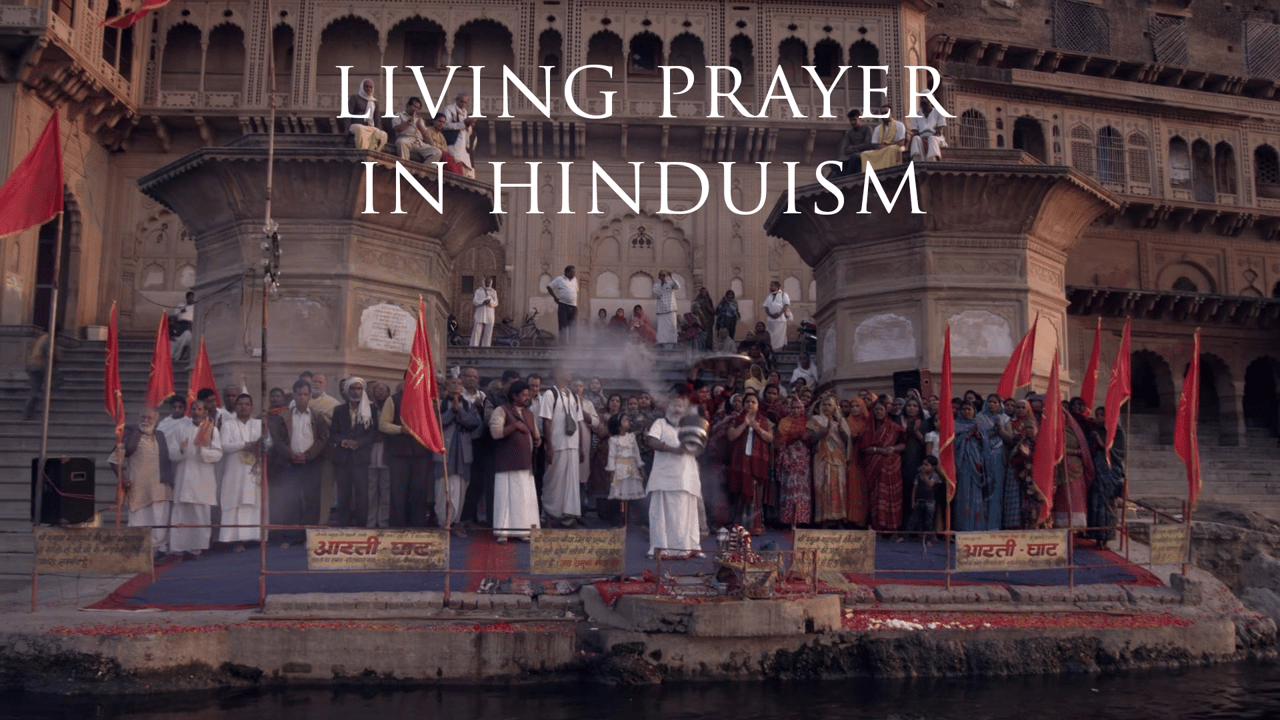
Director Jean-Claude Lubtchansky (1930-2020) was a free-lance film director who lived in Paris, France. He made films for over 60 years and has collaborated with his son Mikaël as cameraman for 25 years and his daughter Gabrielle was the editor of this series of films. Filming in the southern of India, Tamil Nadu, and its great temples region brought the daily practice of the common people as well as the traditions of sculptures, chanting and dance. In North India, particularly in Varanasi along the Ganges, devotion takes on a heightened intensity, where the presence of cremation rites brings worship into direct contact with mortality, creating an immediate and visceral spiritual atmosphere. The force of the natural world, with humans as part of it, found its cinematic expression in Bali: Balinese Hinduism breathes with the island’s luxuriant environment, its rituals rising like mist from rice fields and woven through forests and mountains, so that nature itself seems to participate in the sacred order.
Inside the film
Cast & crew
- producerActor · Axis Mundi