The Structured Launch Standard for Independent Film Distribution

Why Most Independent Films Struggle With Distribution
Every year, thousands of independent films are completed. Only a fraction generate meaningful revenue. The issue is rarely quality. It is structure.
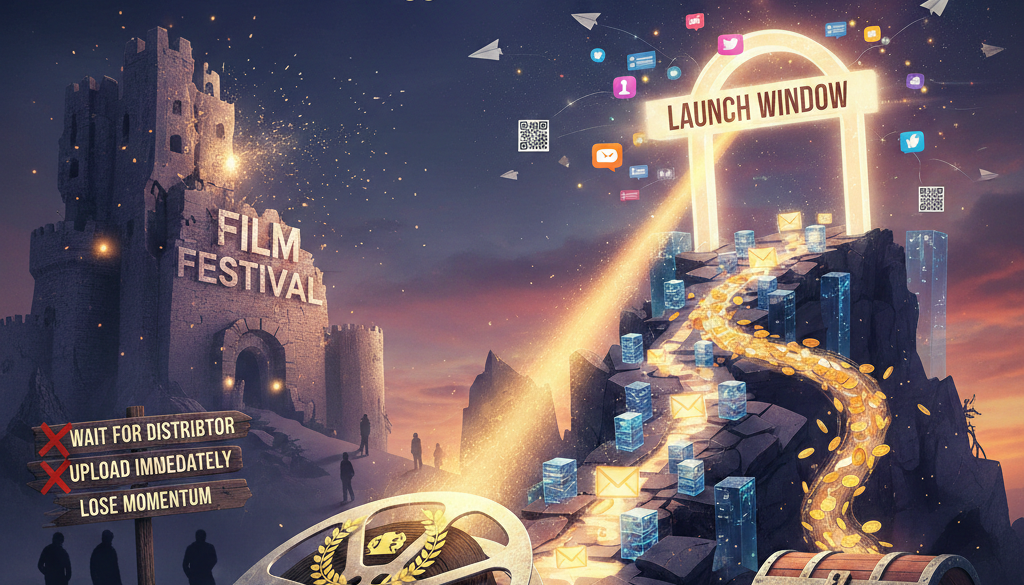
Festival exposure is not a distribution strategy. Festivals create visibility peaks. They generate press, networking opportunities, and sometimes awards. What they do not create is a scalable revenue system. A strong festival run can build buzz, secure reviews, and attract industry attention, but once the circuit ends, momentum collapses unless a structured follow-up plan exists. Too many filmmakers treat festival success as the finish line when it should be the starting block.
Passive streaming rarely generates sustainable revenue. Uploading a film to a platform creates availability, not demand. Streaming economics favor massive catalogs and algorithmic recommendation systems built around scale. Independent films rarely benefit from this model unless supported by significant marketing budgets. The platform's incentive is to keep subscribers engaged across thousands of titles: your film is one of many, competing for attention against content backed by far larger promotional machines.
Being "everywhere" does not guarantee revenue. Without urgency or structure, viewers postpone watching. Postponement becomes permanent. A film listed on three platforms with no coordinated release strategy will generate less revenue than a single focused launch, because scattered availability creates noise, not sales.
The Core Problem: Passive Distribution
Most independent releases follow what can be called the Passive Distribution Model. The film becomes available. Discovery is hoped for. Revenue is uncertain and spread over time.
What passive distribution looks like in practice:
- Film uploaded to multiple platforms simultaneously
- No defined release window or premiere event
- No event-driven moment to concentrate attention
- No coordinated audience activation strategy
The result is diluted attention. Platforms prioritize volume: their business model depends on large libraries and recurring subscriptions. Individual independent films represent marginal value unless they generate large traffic on their own. When attention is spread over months or years without any focal point, revenue fragments. There is no peak, no concentration, and no leverage to build upon.
This is not a failure of the film. It is a failure of the distribution model. The content may be exceptional, but without structural support, it gets buried under an avalanche of new releases: each one equally passive, equally undiscovered.
Why Distribution and Launch Are Not the Same Thing
This distinction is critical and often misunderstood.
Distribution answers: where is the film available?
Launch answers: how is attention concentrated?
A launch creates urgency, structure, and coordinated communication. Without a defined launch window, even strong promotion underperforms, because the audience has no reason to act now rather than later. Revenue increases when attention is concentrated within a defined time frame. Short launch windows generate higher conversion rates, stronger word-of-mouth, and clearer marketing focus.
Consider the difference: ten thousand unfocused impressions spread across three months are weaker than one thousand viewers activated during a single defined event. The concentrated model creates social proof, shared experience, and momentum that feeds itself. Every viewer who watches during the launch window becomes a potential amplifier, sharing their experience while it still feels current and urgent.
The Three-Phase Structured Launch Model
Independent film distribution requires three distinct phases, each with its own objectives and tactics.
Phase 1: Audience Preparation (30–60 Days Before Release)
This is the foundation. Build or activate an email list of people who have expressed genuine interest. Release controlled teaser content (behind-the-scenes footage, director's notes, exclusive stills) to build anticipation without giving everything away. Announce a defined premiere date and collect early registrations. The goal of this phase is not awareness in the broad sense. The goal is readiness: a warm, engaged audience that is primed to act when the launch window opens.
Phase 2: The Launch Window (7–14 Days)
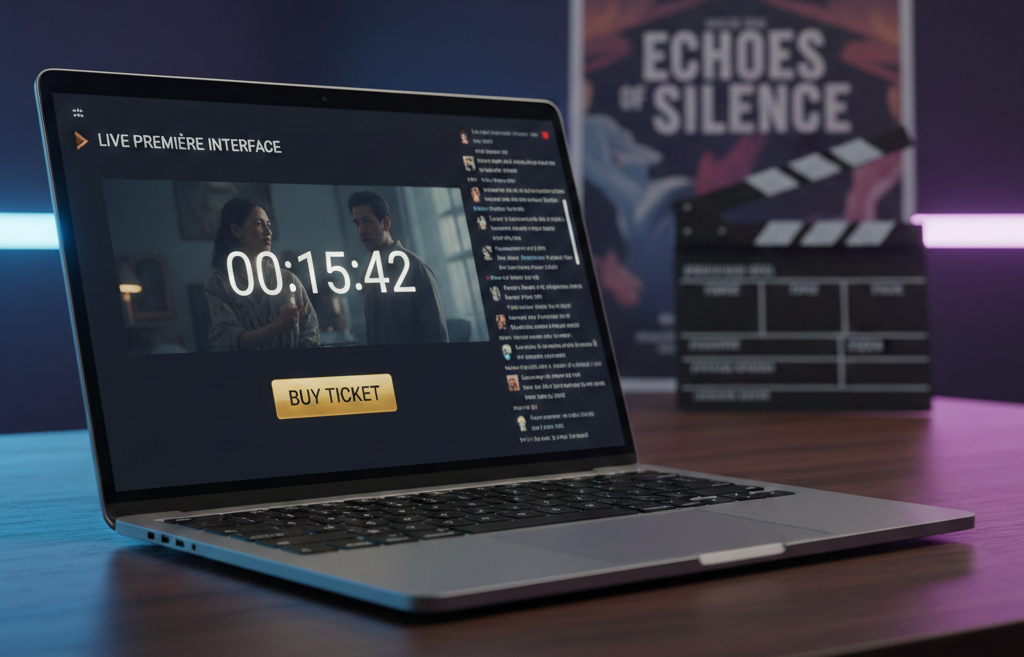
This is where revenue peaks. Structure a paid online premiere with limited-time ticket access. Include live interaction elements (a watch party, a Q&A with the director, a moderated discussion) to create an event that feels exclusive and time-bound. Concentrate all communication during this window: email sequences, social media pushes, press outreach. Every message should reinforce the same call to action within the same timeframe.
A film should launch like a product, not sit like a file.
Phase 3: Controlled Expansion
After the initial launch window closes, revenue should become layered rather than accidental. Offer replay access at a different price point. Bundle the film with bonus content: extended interviews, a making-of documentary, the screenplay. Expand to secondary events: university screenings, community watch parties, panel discussions. Introduce educational or institutional licensing for organizations aligned with the film's themes. Each layer adds a new revenue stream while extending the film's lifecycle far beyond a single release date.
Event-Driven Distribution and Audience Ownership
Events create urgency. Urgency increases conversion. Premium positioning increases perceived value. Interaction increases retention. A film screening structured as an event (with a defined start time, live elements, and limited availability) generates more focus and more revenue than a permanent catalog listing. Scarcity outperforms availability because it forces a decision: watch now, or miss out.
This principle extends beyond the premiere itself. Every subsequent screening, Q&A, or special edition release can be structured as a micro-event, each one reactivating the audience and generating incremental revenue.
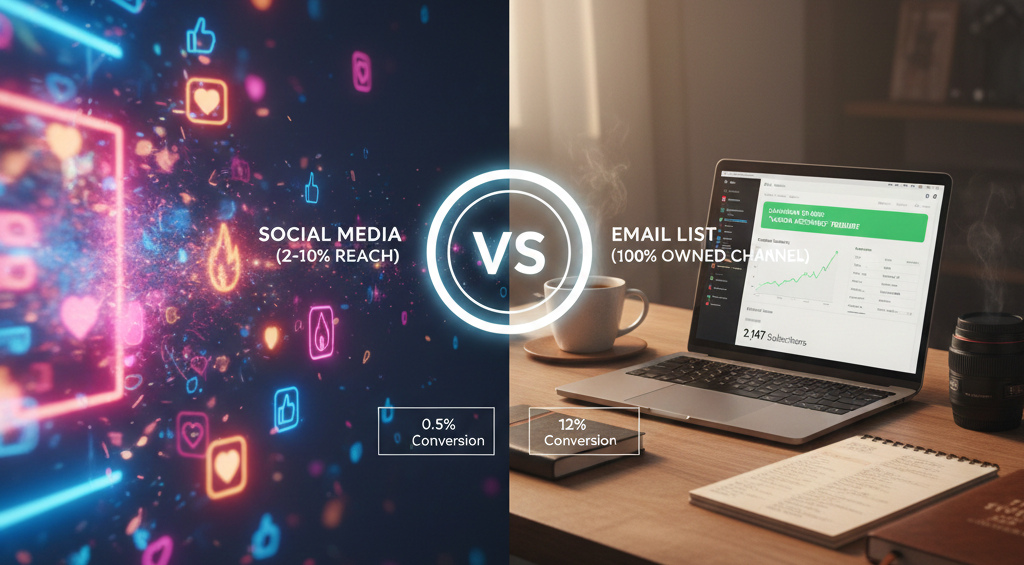
But events only work if you own the relationship with your audience. Independent filmmakers cannot rely solely on algorithmic discovery. Social media followers are rented attention: platform algorithms decide visibility, reach fluctuates unpredictably, and conversion remains inconsistent. Email is owned attention. An email list allows direct communication during launch windows, creating leverage that is entirely independent of external platforms and their ever-changing rules.
Direct-to-audience distribution ensures controlled pricing, higher margins, complete data ownership, and full revenue transparency. You know exactly who watched, when they watched, how they found you, and what they paid. That data becomes the foundation for every future release, every future launch, and every future decision about your distribution strategy.
Conclusion
Independent filmmakers need more than hosting. They need infrastructure and structure.
The shift is clear: from exposure to revenue control, from passive catalogs to defined launch windows, from platform dependency to audience ownership. The filmmakers who will thrive are not necessarily those with the biggest budgets or the most connections: they are the ones who treat distribution as a discipline equal to production. For the broader map, start with the complete guide to independent film distribution, then put the model into practice with the 30-day launch framework, a paid online premiere, and the case against passive distribution.
The question is no longer where your film will be available. The question is how it will be launched.